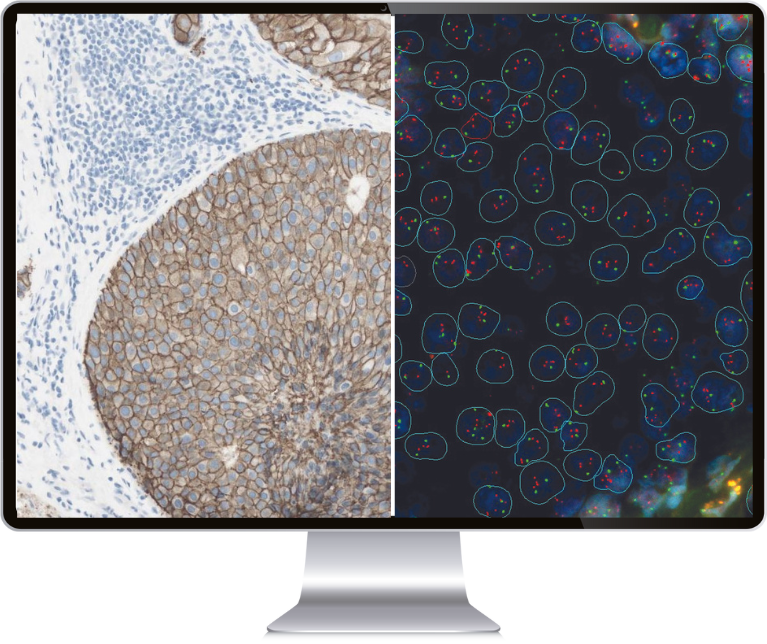
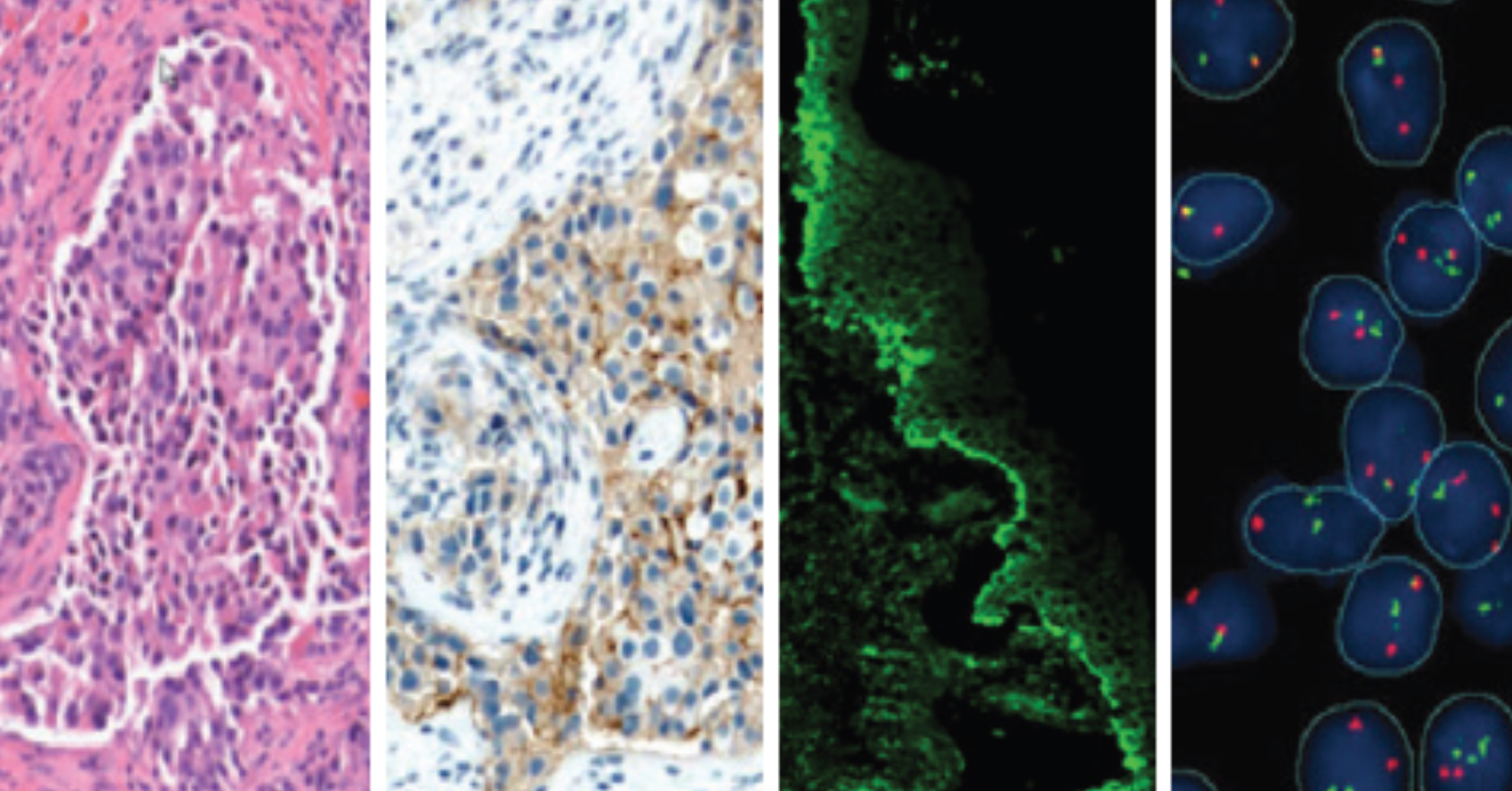
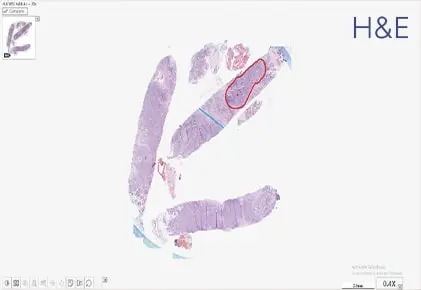
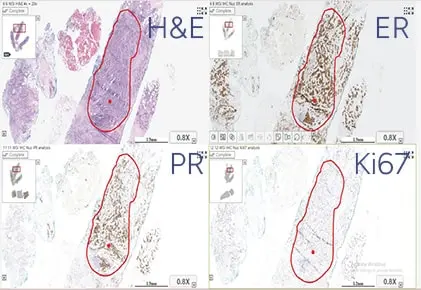
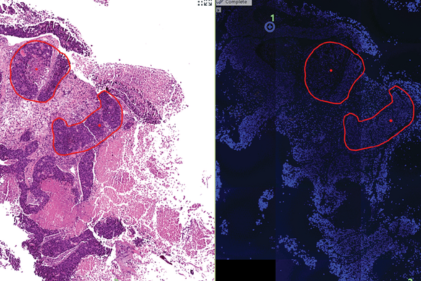
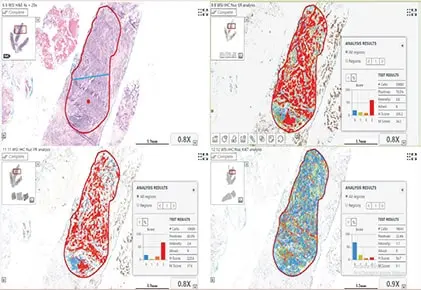
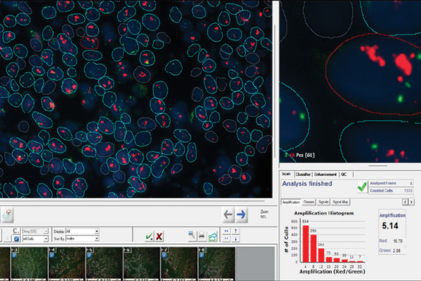
Our innovative digital pathology portfolio includes HiPath Pro for the scanning and analysis of brightfield specimens, HiPath FL for fluorescence whole slide images, and PathFusion for the imaging and analysis of H&E, IHC, IF and FISH slides across multiple probe vendors and sample types.
Comprehensive Platform
Experience the power of a comprehensive digital pathology platform featuring side-by-side review of brightfield and fluorescence images, enabling the analysis of FISH and IF patterns in their morphological context.
Scanner-Agnostic
Elevate your pathology lab’s image management capabilities with ASI’s scanner-agnostic digital pathology platform, and benefit from the visualization, tissue matching and analysis of brightfield images acquired on third-party scanners.
Benefits to your lab
Modular image acquisition platform customizable to your lab
Scanner-agnostic viewing and quantitative analysis tools
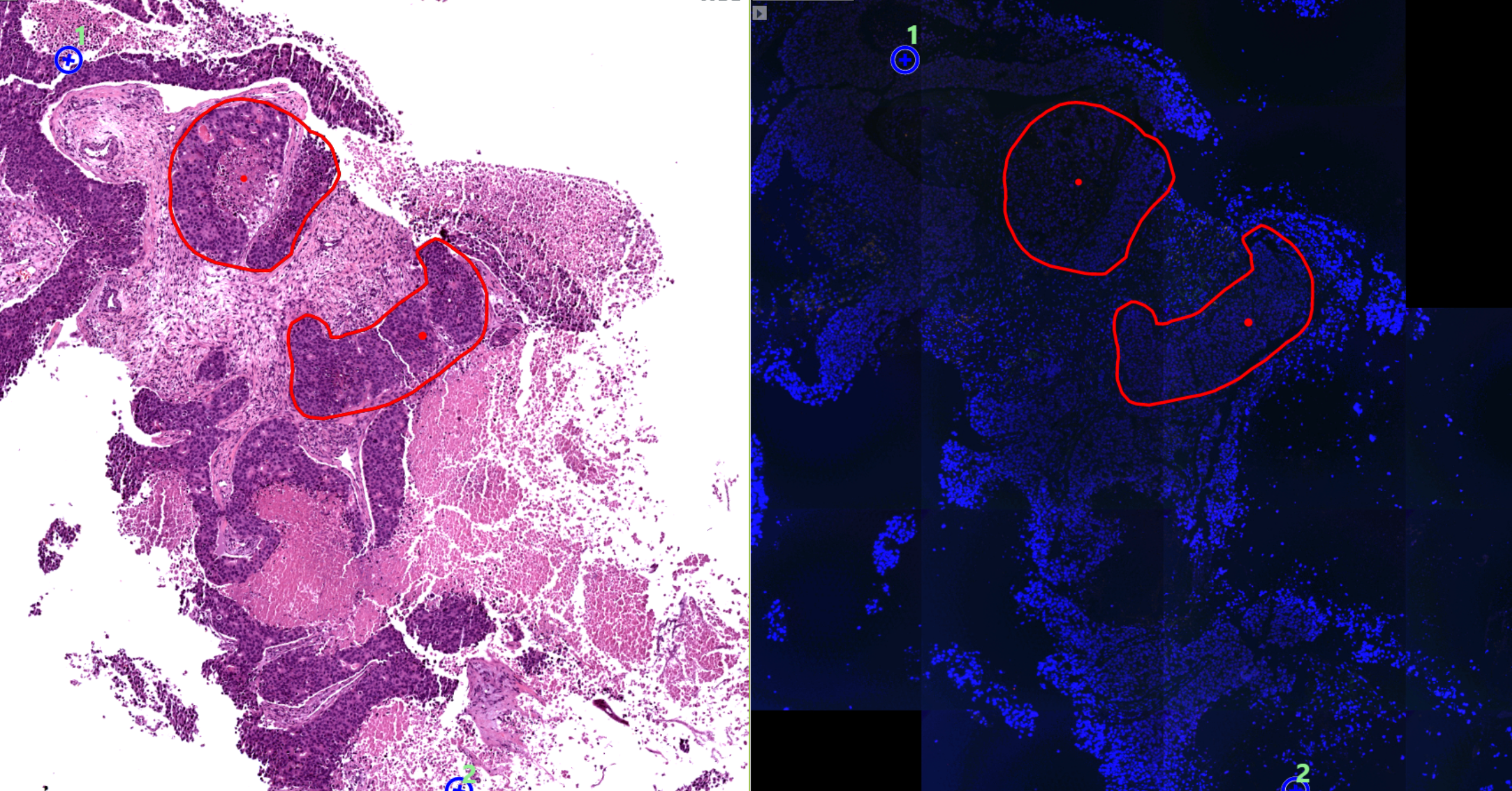
Tissue matching across brightfield and FISH images
Integrated with Lab Information Systems (LIS)
HIPAA-compliant remote access solution
Bridging the gap between Brightfield Pathology and FISH Analysis
1
Scan, View & Mark
Digitize your pathology slides
HiPath Pro
PathFusion
2
Match & Align
Simultaneously review up to 4 registered slides and automatically transfer regions of interest
HiBand
HiFISH
3
Analyze
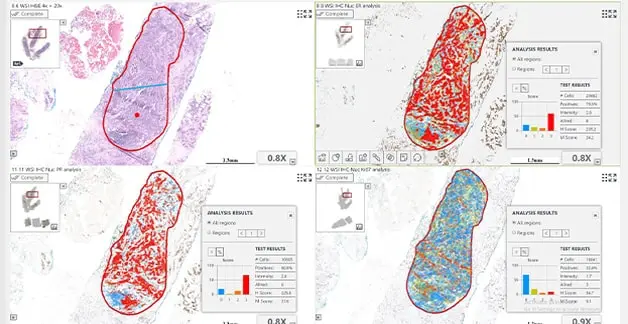
Perform quantitative analysis for standardized results
HiBand
HiFISH
4
Report
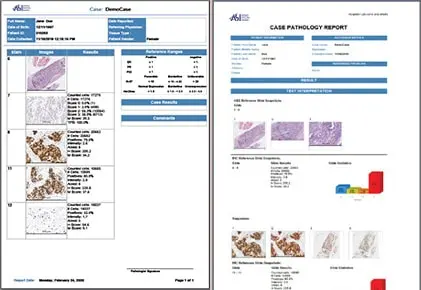
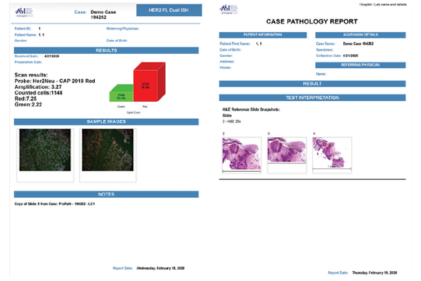
Prepare customized reports including screenshots, images and quantitative results
HiBand
HiFISH
Quotes & Testimonials
Digital FISH enumeration is a useful tool to improve the efficacy of HER2 FISH enumeration and capture genetic heterogeneity across HER2 signals”, “removing manual scoring bias and importantly improving standardization across scoring with similar results to manual methods.
Pathologists traditionally assess Ki-67 through visual estimation, a method prone to variability, especially when the proliferation index is not clearly high or low.” “Our analysis evaluates the agreement between manual and automated scoring, highlighting the potential of computational algorithm to enhance accuracy and reproducibility in Ki-67 assessment.